Pier and Beam Repair in Abilene, TX
Last updated:
Expert repair and reinforcement of pier and beam foundation systems throughout Abilene. Our specialized services address sagging floors, failed piers, and structural issues common in older homes, restoring stability and eliminating safety concerns.
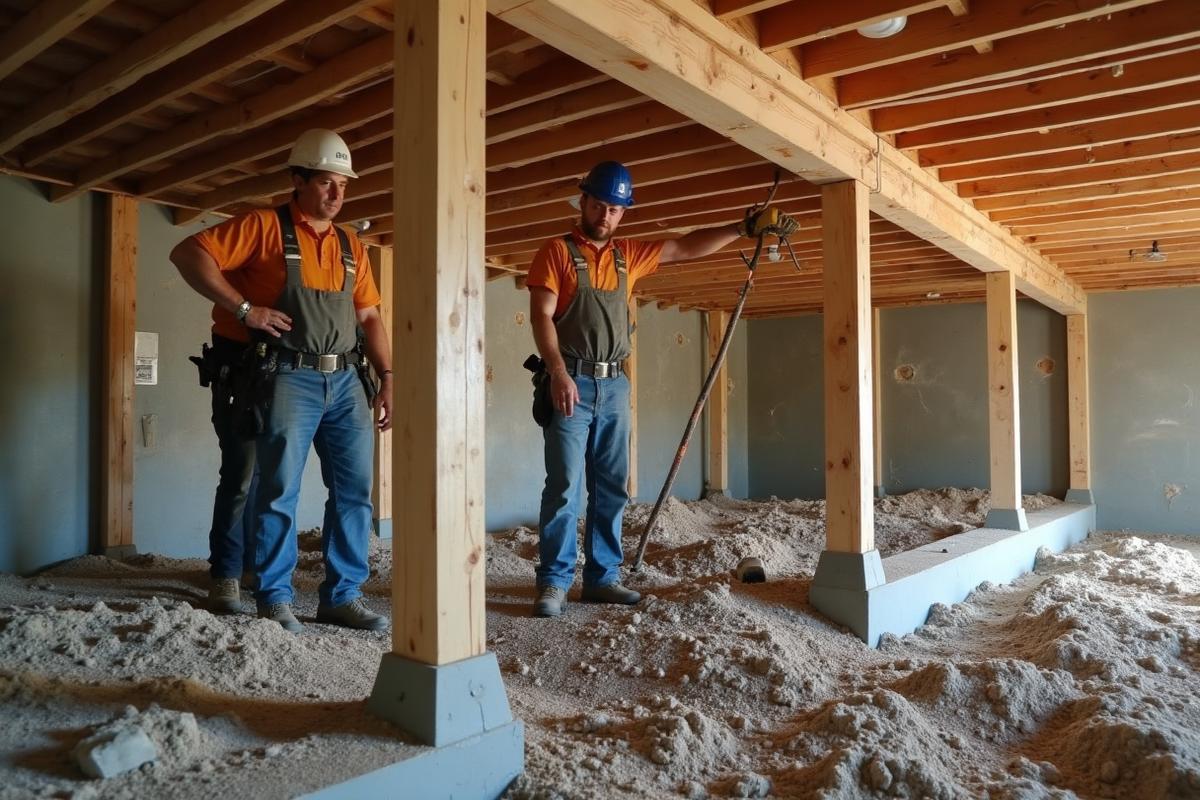
Common Pier and Beam Problems in Abilene
Sagging Floors
Floor joists lose support when piers settle or fail, creating noticeable dips and bouncy areas in your floors.
Common Causes:
- Pier settlement
- Inadequate support spacing
- Moisture damage to wood
Moisture Damage
Crawl space moisture causes wood rot in beams and posts, compromising structural integrity over time.
Common Causes:
- Poor ventilation
- Plumbing leaks
- Ground moisture
Pier Failure
Support piers shift, settle, or deteriorate, leaving floor joists without adequate structural support.
Common Causes:
- Soil movement
- Inadequate foundations
- Age and weather
Professional Pier and Beam Services
Pier Replacement
Complete replacement of failed or inadequate support piers with properly sized concrete or steel alternatives designed for Abilene soil conditions.
- Permanent solution
- Proper load distribution
- Prevents future settlement
Beam Reinforcement
Strengthening existing beams with additional support or replacing damaged sections to restore structural integrity.
- Extends structure life
- Improves load capacity
- Eliminates sagging
Floor Joist Repair
Repair or replacement of damaged floor joists, including proper attachment and spacing for optimal support.
- Eliminates floor bounce
- Prevents further damage
- Restores floor level
Shimming Services
Precision shimming to level floors and distribute loads properly across the pier and beam system.
- Quick leveling
- Cost-effective
- Fine-tune adjustments
Our Pier and Beam Repair Process
Thorough inspection of crawl space and foundation system
Assessment of pier condition, spacing, and load-bearing capacity
Evaluation of beam and joist condition for damage or deterioration
Moisture level testing and ventilation assessment
Custom repair plan development based on specific issues found
Professional installation of new piers or reinforcement systems
Beam repair or replacement as needed for structural integrity
Precision shimming and leveling for optimal floor alignment
Moisture control improvements and ventilation upgrades
Final inspection and warranty documentation
Advantages of Pier and Beam Foundations
Easy Access for Repairs
Unlike slab foundations, pier and beam systems provide accessible crawl spaces that make plumbing, electrical, and HVAC maintenance much easier and less expensive.
Better Insulation Options
Elevated floors allow for superior insulation installation, improving energy efficiency and comfort while reducing heating and cooling costs.
Flexible Adjustments
Pier and beam systems can be adjusted and leveled more easily than slab foundations, making future settling issues less expensive to address.
Moisture Management
Proper ventilation in crawl spaces prevents moisture buildup that can cause mold, rot, and other health hazards common in slab foundations.
Cost-Effective Repairs
Individual components can be repaired or replaced without major excavation, making pier and beam maintenance more affordable long-term.
Suitable for Texas Clay
Pier and beam foundations handle Abilene's expansive clay soil movement better than slabs, reducing stress from soil expansion and contraction.
Why Choose Our Pier and Beam Experts?
Specialized Experience
Over 20 years specializing in pier and beam systems throughout Abilene
Professional Tools
Advanced equipment for precise measurements and professional repairs
Quality Materials
Premium grade materials designed to last in Texas climate conditions
Comprehensive Service
Complete pier and beam solutions from minor repairs to full replacement
Restore Your Pier and Beam Foundation
Don't let sagging floors and structural issues worsen. Professional pier and beam repair restores your home's stability, safety, and value with proven techniques and quality materials.
Complete Foundation Solutions
Complete foundation solutions for your home's needs
House Leveling
Professional house leveling services to correct uneven foundations and restore structural integrity.
Learn MoreCrawl Space Repair
Encapsulation, structural jacks, and moisture control for crawl spaces.
Learn MorePier & Beam Foundation
Complete pier and beam foundation repair including pier replacement and beam work.
Learn MoreYour Foundation Repair Journey
Simple, transparent process from inspection to completion
Free Inspection
Professional assessment of your foundation and soil conditions
Schedule InspectionCustom Estimate
Detailed repair plan and transparent pricing for your specific needs
Get Your EstimateExpert Repair
Professional installation using proven methods and quality materials
View ServicesReady to get started? Schedule your free foundation inspection today.
Why Older Abilene Homes Are Pier and Beam
Most Abilene houses built before the slab era sit on pier and beam: a perimeter and a grid of interior supports carrying wooden beams, with a crawl space between the ground and the floor. It was the practical way to build on clay, because the structure bears on discrete points that can be adjusted rather than on one continuous slab that cannot.
That adjustability is still the main advantage. A failed support in a crawl space can be reset or replaced in a day, without drilling concrete, and the plumbing above it is reachable — a leak that would mean tunnelling under a slab is a straightforward repair here.
The weakness is moisture. Crawl spaces take on humidity, and wood in contact with damp air long enough will rot at the base of piers, along beam bearings, and in joist ends. Nearly every serious pier-and-beam failure in Abilene traces back to water that was never dealt with: a downspout discharging beside the foundation, ground sloping toward the house, or a slow plumbing leak. Replacing rotted timber without drying the space out simply restarts the clock.
Pier and Beam Support Options
| Option | Typical cost | Lifespan / duration | Best for | Notes |
|---|---|---|---|---|
| Concrete pad and block | Lowest per support | Decades if kept dry | Replacing failed original supports at grade | The traditional Abilene pier-and-beam support. Depends entirely on the pad sitting on stable soil. |
| Poured concrete pier | Mid-range | Design life of the structure | Supports that have sunk into soft clay | Reaches below the seasonally active soil layer, so it does not ride the shrink-swell cycle. |
| Adjustable steel jack | Mid to high per support | Design life, adjustable later | Mid-span sags between existing supports | Can be re-adjusted without excavation, which is useful where some movement is still expected. |
| Vapor barrier and drainage | Quoted as its own line item | 10+ years for the barrier | Any crawl space with damp ground or standing water | Not structural, but the wood rots again without it. Usually the difference between a repair lasting and repeating. |
Pier and Beam Repair FAQs
How do I know if my pier and beam foundation needs work?
The floor tells you first. Bouncy or spongy spots, a noticeable slope, and floors that creak in places they never used to are the classic early signs in an Abilene pier-and-beam home. Doors that stop latching and gaps opening where baseboards meet the floor follow. Underneath, the confirmation is visible: shims that have fallen out, wooden piers rotted at the base, beams sagging between supports, or joists showing dark staining and softness from long-term moisture. A musty smell inside the house often means crawl space moisture already working on the wood. If you can get under the house safely, look at where the piers meet the beams — daylight between them means that pier is carrying nothing. Abilene Foundation Repair inspects the crawl space and takes floor elevation readings, and will tell you when what you have is a single failed pier rather than a whole-house problem.
How much does pier and beam repair cost in Abilene?
Pier-and-beam work in Abilene typically runs $3,000 to $12,000, and it is usually cheaper than equivalent slab repair because the crawl space gives direct access to the supports. Replacing or resetting individual piers and adding shims to correct a sag sits at the low end. Costs climb when the wood itself has failed: replacing a rotted main beam or sistering damaged joists is carpentry on top of leveling, and both are priced separately on the estimate. Adding a vapor barrier and correcting crawl space drainage — usually necessary, since moisture is what rotted the wood in the first place — is an additional line. Abilene Foundation Repair itemizes each of these rather than quoting one number, so you can stage the work if budget requires, doing the structural supports now and the encapsulation next season.
Is pier and beam better than a slab foundation?
Neither is better outright; they fail differently. A pier-and-beam foundation is far easier and cheaper to repair, because everything is reachable from the crawl space — you can replace a failed support without drilling through concrete. Plumbing is accessible too, so a leak under a pier-and-beam house is a straightforward fix rather than a slab tunneling job. The tradeoff is moisture: crawl spaces in Abilene take on humidity, and wood exposed to it long enough rots, which is why vapor barriers and drainage matter so much. Slabs avoid the wood-rot problem entirely but are unforgiving when the clay beneath them moves, and every repair means going through or under concrete. Most older Abilene homes are pier and beam and most newer ones are slab. Abilene Foundation Repair works on both and will not tell you to convert one to the other.
What is shimming and is it a permanent fix?
Shimming means inserting tapered material — hardwood or steel plate — between the top of a pier and the beam it supports, taking up the gap where the structure has settled away from its support. Done properly it is a legitimate part of leveling a pier-and-beam house, and it is how the final quarter inch of adjustment gets made after the piers themselves are set. Done as a standalone fix it is a temporary patch. If the pier underneath has sunk because the soil beneath it moved, shimming the gap restores the floor for a season while the actual cause continues. Wood shims in a damp Abilene crawl space also compress and rot. The durable version is to correct or replace the failing pier and use shims only for fine adjustment. Abilene Foundation Repair specifies on the estimate which piers are being reset and which are only shimmed.
Do you fix the crawl space moisture too?
Yes, and on most Abilene pier-and-beam homes it is not optional if you want the structural repair to last. Wood piers, beams and joists rot because they sit in a damp crawl space, so replacing rotted wood without drying the space out simply resets a clock. The standard treatment is a vapor barrier across the ground — heavy polyethylene sealed at the seams and run up the piers — plus correcting whatever is putting water under there: downspouts discharging beside the foundation, grading that slopes toward the house, or a plumbing leak. Where water genuinely collects, a French drain or sump is added. Abilene Foundation Repair quotes moisture control as its own line item alongside the structural work, so you can see the cost split, and we will tell you if your crawl space is dry enough not to need it.