Drainage Solutions in Abilene, TX
Last updated:
Protect your foundation from water damage with professional drainage solutions designed for Texas weather patterns. Our comprehensive water management systems prevent foundation problems before they start, saving you thousands in costly repairs.
Water Problems We Solve in Abilene
Foundation Saturation
Excess water around foundations causes clay soil expansion, leading to foundation heaving and structural damage.
Our Solution:
French drains and foundation waterproofing redirect water before it saturates surrounding soils.
Basement Flooding
Poor drainage allows water to enter basements, causing damage to stored items, electrical systems, and creating mold risks.
Our Solution:
Interior and exterior waterproofing systems with sump pumps provide comprehensive flood protection.
Erosion Issues
Improper drainage causes soil erosion around foundations, undermining structural support and creating settling problems.
Our Solution:
Surface drainage and proper grading prevents erosion while maintaining soil stability around foundations.
Clay Soil Movement
Abilene's clay soils expand dramatically when wet and shrink when dry, causing continuous foundation movement.
Our Solution:
Consistent moisture control through drainage systems minimizes clay soil expansion and contraction cycles.
Professional Drainage Systems
French Drain Installation
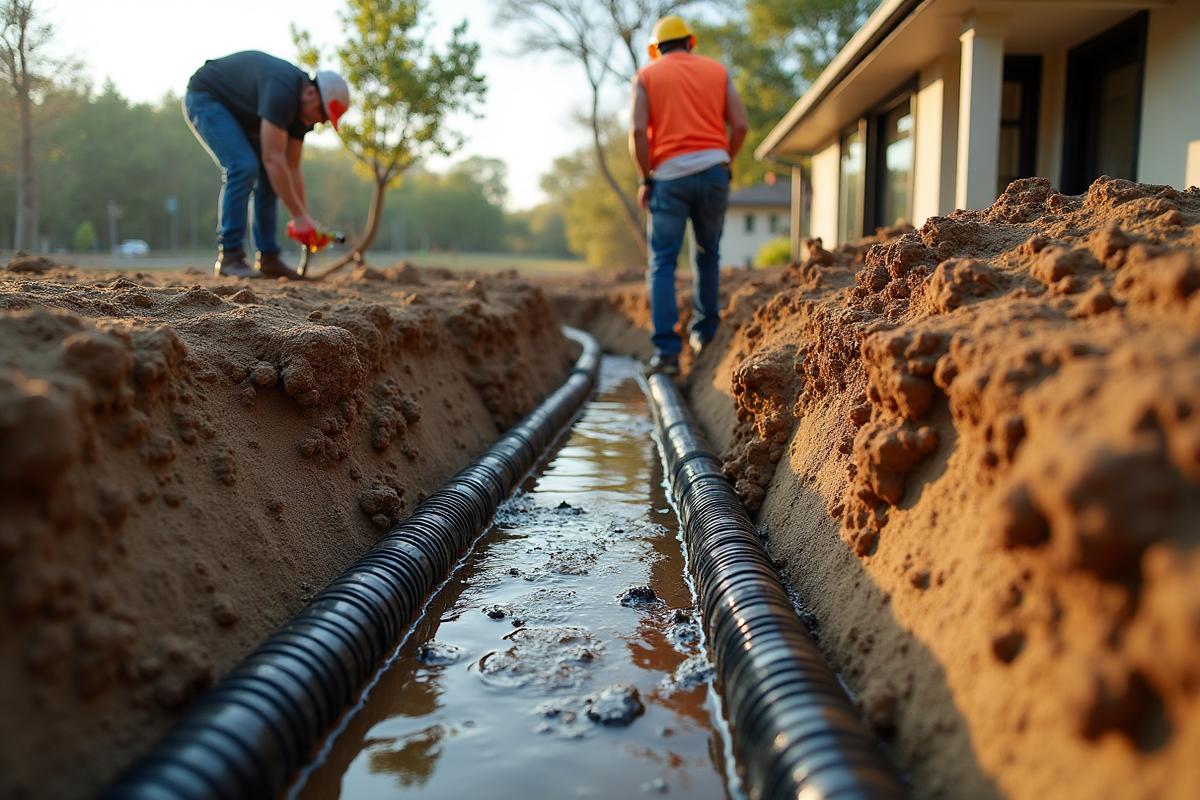
Subsurface drainage systems that intercept and redirect groundwater away from your foundation using perforated pipes and gravel beds.
- Prevents foundation saturation
- Long-term solution
- Minimal maintenance required
Surface Drainage Systems
Strategic grading and surface drainage channels that direct rainwater runoff away from your foundation before it can cause problems.
- Immediate water diversion
- Prevents pooling
- Protects landscaping
Basement Waterproofing
Comprehensive waterproofing solutions including exterior membranes, interior systems, and sump pump installations.
- Dry basement guarantee
- Mold prevention
- Increased home value
Our Drainage Installation Process
Site Evaluation
Comprehensive assessment of water flow patterns, soil conditions, and existing drainage issues around your property.
Custom Design
Engineering drainage solutions specific to your property's topography, rainfall patterns, and foundation protection needs.
Professional Installation
Expert installation using proper materials and techniques, ensuring optimal water diversion and long-term performance.
Testing & Warranty
System testing during rainfall and comprehensive warranty coverage for peace of mind and long-term protection.
Why Drainage Matters in Abilene
Texas Weather Challenges
Severe Thunderstorms
Abilene receives intense rainfall that can overwhelm inadequate drainage systems, causing foundation flooding and damage.
Clay Soil Reactions
Texas clay expands up to 10% when saturated, creating massive pressure against foundations and causing structural damage.
Long-term Protection
Proper drainage prevents repeated wet-dry cycles that cause ongoing foundation movement and costly repairs.
Prevention vs. Repair Costs
Installing proper drainage systems costs far less than repairing foundation damage caused by water issues.
- • Drainage installation: $3,000-8,000
- • Foundation repair: $8,000-25,000+
- • Basement restoration: $10,000-30,000+
Insurance Benefits
Many insurance policies favor homes with proper drainage systems, potentially reducing premiums and improving claim outcomes.
Protect Your Foundation Today
Don't wait for water damage to occur. Professional drainage solutions provide immediate protection and long-term peace of mind for your most valuable investment.
Complete Foundation Solutions
Complete foundation solutions for your home's needs
Foundation Repair
Expert foundation repair using advanced pier systems for Abilene's clay soil conditions.
Learn MoreSlab Leak Repair
Expert detection and repair of plumbing leaks beneath concrete slabs.
Learn MoreBasement Waterproofing
Interior and exterior waterproofing to protect your foundation from water damage.
Learn MoreYour Foundation Repair Journey
Simple, transparent process from inspection to completion
Free Inspection
Professional assessment of your foundation and soil conditions
Schedule InspectionCustom Estimate
Detailed repair plan and transparent pricing for your specific needs
Get Your EstimateExpert Repair
Professional installation using proven methods and quality materials
View ServicesReady to get started? Schedule your free foundation inspection today.
Water Is the Variable You Can Control
Of everything acting on an Abilene foundation, drainage is the part a homeowner can actually change. The clay is what it is and the weather is what it is, but where the water goes when it arrives is a design decision.
The numbers make the case. A thousand square feet of roof sheds roughly 600 gallons in a one-inch rain. If a downspout ends at a splash block against the wall, most of that goes into the soil within a couple of feet of the foundation — precisely the zone whose moisture content you most want stable. Extending that discharge four to six feet out costs very little and takes an afternoon.
The rest is grading and interception: ground that falls away from the house over the first several feet, and a drain where water genuinely collects rather than wherever a contractor would like to install one. Plenty of homes sold a French drain needed six feet of gutter extension.
Drainage Options Compared
| Option | Typical cost | Lifespan / duration | Best for | Notes |
|---|---|---|---|---|
| Downspout extensions | Low — often a few hundred dollars | Years; check the outlet stays clear | Roof runoff discharging beside the wall | Discharge 4–6 ft out minimum. The cheapest foundation protection there is, and frequently all that is needed. |
| Regrading the perimeter | Low to moderate | Long, if landscaping does not undo it | Ground sloping back toward the house | Aim for a fall away from the foundation over the first several feet. Re-check after new landscaping or mulch. |
| Surface drains and catch basins | Moderate | Long with periodic clearing | A defined low spot that holds water | Collects standing water at the point it pools. Needs somewhere lower to discharge to. |
| French drain | Low thousands per side | Decades if the fabric and gravel are right | Ground that stays saturated for days after rain | Gravel trench with perforated pipe on a slope. Over-specified often — try downspouts and grading first. |
Drainage FAQs
How does drainage affect my foundation?
In Abilene it is the single biggest controllable factor. The clay under your house swells when wet and shrinks when dry, and foundations crack not because the soil is wet or dry but because it is unevenly wet — one side saturated, another parched. Drainage determines that evenness. A downspout dumping several hundred gallons against the northeast corner during one storm creates a swelling zone there and nowhere else, and the slab has to accommodate the difference. Grading that slopes back toward the house does the same thing more slowly. Getting water away from the perimeter and keeping moisture around the foundation reasonably consistent prevents far more damage than it repairs. Abilene Foundation Repair checks grading, downspouts and low spots as part of every foundation inspection, because piering a house while the drainage that broke it stays unchanged is a short-term fix.
What is a French drain and do I need one?
A French drain is a gravel-filled trench with a perforated pipe in the bottom, laid on a slope so water that soaks into the ground is intercepted and carried somewhere harmless instead of pooling against your foundation. You need one when water genuinely collects — a yard that stays soggy for days after an Abilene downpour, a low area beside the house holding standing water, or a slope directing runoff toward the structure. You do not need one if the problem is simply that a downspout ends too close to the wall; extending that downspout costs a fraction as much and solves it. Abilene Foundation Repair looks at where water actually goes during rain before recommending a drain, because French drains get sold routinely to homeowners whose real problem was six feet of gutter extension.
How much do drainage solutions cost in Abilene?
It ranges widely because the solutions do. Extending downspouts and correcting the grade immediately around the foundation is the cheapest and often the most effective intervention, typically a few hundred dollars. A French drain along one side of a house runs into the low thousands depending on length, depth and whether the trench crosses driveways or mature roots. A full perimeter system with a sump and discharge line is the most involved. Surface drains and catch basins for a low spot sit in between. Abilene Foundation Repair prices drainage from a walk of the property during or shortly after rain where possible, because that is when the water shows you what it does. We quote the least intervention that will actually work rather than defaulting to the largest system, and will say when regrading alone is enough.
How far should downspouts discharge from the foundation?
At least four to six feet from the wall, and further on a lot with poor slope. The default on most Abilene homes is a downspout ending at a splash block right at the foundation, which puts the entire roof catchment of that section into the soil within a couple of feet of the slab — precisely the zone whose moisture content you most want stable. Extending the discharge, either with above-ground extensions or buried solid pipe running to daylight, is the cheapest foundation protection available and takes an afternoon. Buried pipe should be solid, not perforated, along the run — perforated pipe leaks water back out exactly where you are trying to move it from. Make sure the outlet stays clear; a buried line that silts up is worse than none. Abilene Foundation Repair checks downspout discharge on every inspection.
Should I water my foundation during a Texas drought?
Yes, and consistently rather than heavily. During an Abilene summer the clay around a foundation shrinks as it dries, pulling away from the slab edge and letting that section drop — the visible sign is a gap you can slide your fingers into between soil and foundation. The fix is to keep the moisture level steady, not to soak the ground. A soaker hose laid twelve to eighteen inches out from the foundation, run for a short period on a regular schedule, maintains that consistency. What causes damage is the extreme swing: months of nothing followed by a heavy soak, which makes the clay expand fast. Water all sides, not just the one that looks worst, since evenness is the goal. Abilene Foundation Repair walks homeowners through a watering schedule after any repair, because it is the cheapest thing you can do to protect the work.