Concrete Lifting in Abilene, TX
Last updated:
Professional concrete lifting services using advanced PolyLevel injection technology. Restore sunken driveways, sidewalks, and patios quickly and affordably without the expense and disruption of complete concrete replacement.
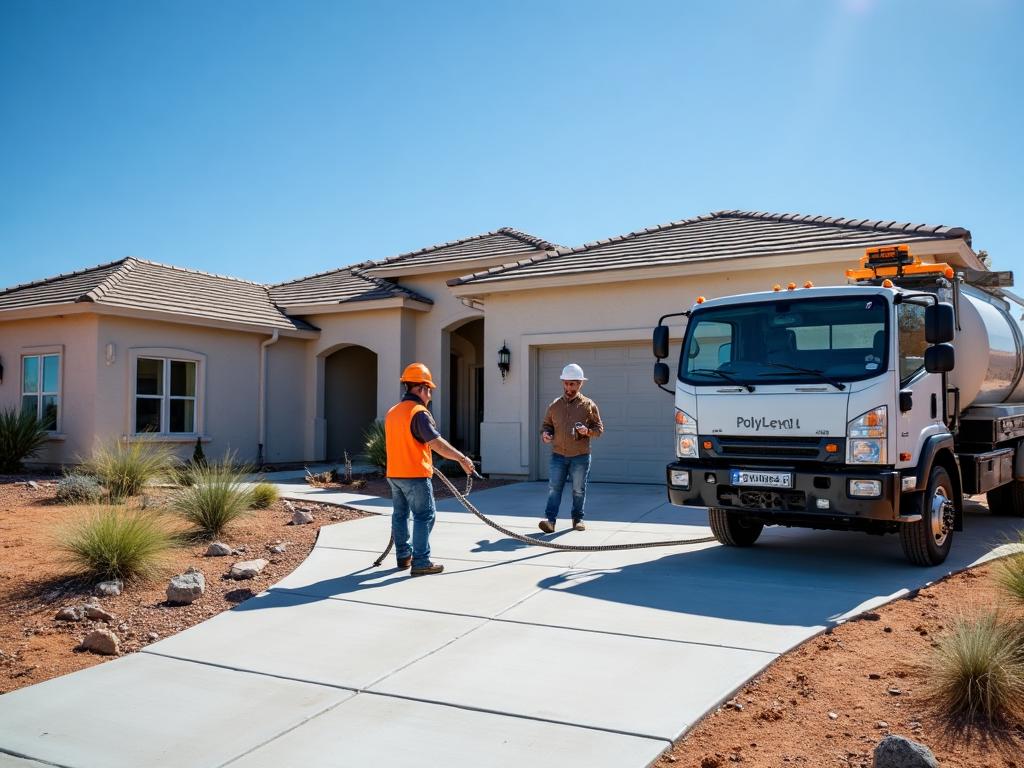
Concrete Lifting Applications
Driveways
Restore sunken or uneven driveways that create trip hazards and water pooling problems.
- Eliminates trip hazards
- Improves drainage
- Restores curb appeal
Sidewalks
Level unsafe sidewalk sections that pose liability risks and accessibility challenges.
- Safety compliance
- ADA accessibility
- Prevents lawsuits
Patios & Pool Decks
Fix settling concrete around pools and patios for safety and proper water drainage.
- Pool safety
- Water management
- Extended concrete life
Garage Floors
Repair sunken garage floors that allow water infiltration and create uneven surfaces.
- Prevents water entry
- Vehicle safety
- Storage protection
Why Choose PolyLevel Over Traditional Methods?
Quick Installation
Most projects completed in hours, not days. Concrete is ready for use within 15 minutes of injection, minimizing disruption to your daily routine and business operations.
Cost Effective
PolyLevel costs significantly less than concrete replacement while providing superior results. Save 50-70% compared to traditional removal and replacement methods.
Long-Lasting
High-density polyurethane foam is waterproof, lightweight, and environmentally stable, providing a permanent solution that won't wash out or deteriorate over time.
PolyLevel Advantages
PolyLevel Concrete Lifting Process
Assessment
Evaluation of concrete condition, settling patterns, and underlying soil issues causing the problem.
Injection Planning
Strategic planning of injection points to achieve optimal lifting and long-term stability.
Drilling
Precise drilling of small injection holes (typically 5/8 inch) in predetermined locations.
PolyLevel Injection
High-density polyurethane foam injection that expands to lift and stabilize concrete.
Real-time Monitoring
Careful monitoring during lifting process to achieve exact level and prevent over-lifting.
Finishing
Sealing injection holes and final cleanup, leaving surfaces ready for immediate use.
PolyLevel vs. Traditional Concrete Replacement
Traditional Replacement
- 2-4 weeks completion time
- 28-day cure time before use
- Expensive demolition and disposal
- Heavy equipment and noise
- Landscape and property disruption
- Weather-dependent installation
PolyLevel Lifting
- Same-day completion
- 15-minute cure time
- 50-70% cost savings
- Minimal equipment and noise
- No landscape damage
- Weather-independent process
Signs You Need Concrete Lifting
Safety Hazards
Uneven concrete creates trip hazards that pose liability risks for homeowners and businesses. Level surfaces eliminate accidents and potential lawsuits.
Water Pooling
Sunken concrete allows water to collect, creating drainage problems, ice hazards in winter, and potential foundation damage from improper water flow.
Property Value Loss
Cracked and uneven concrete surfaces significantly impact curb appeal and property values. Professional lifting restores appearance and marketability.
Progressive Settling
Concrete settling accelerates over time as underlying soil continues to shift. Early intervention prevents more extensive and expensive repairs.
Vehicle Damage
Sunken driveways and uneven garage floors can damage vehicle undercarriages, oil pans, and exhaust systems with repeated impacts.
Accessibility Issues
Uneven walkways create accessibility challenges for elderly residents, individuals with mobility issues, and may violate ADA compliance requirements.
Lift Your Concrete Today
Don't let sunken concrete create safety hazards and reduce your property value. Professional PolyLevel lifting provides fast, affordable, and permanent solutions for all your concrete needs.
Complete Foundation Solutions
Complete foundation solutions for your home's needs
Foundation Repair
Expert foundation repair using advanced pier systems for Abilene's clay soil conditions.
Learn MoreHouse Leveling
Professional house leveling services to correct uneven foundations and restore structural integrity.
Learn MoreSlab Foundation Repair
Fix cracking, heaving, and settlement in slab-on-grade foundations.
Learn MoreYour Foundation Repair Journey
Simple, transparent process from inspection to completion
Free Inspection
Professional assessment of your foundation and soil conditions
Schedule InspectionCustom Estimate
Detailed repair plan and transparent pricing for your specific needs
Get Your EstimateExpert Repair
Professional installation using proven methods and quality materials
View ServicesReady to get started? Schedule your free foundation inspection today.
Why Flatwork Sinks Here
Driveways, walks and patios sink for a different reason than houses do. A house sits on footings or piers; flatwork usually sits directly on whatever was there when it was poured. When that base loses volume — clay shrinking in drought, or fines washed out by water running underneath — the slab loses support and drops under its own weight and traffic.
The tell is usually water. A downspout discharging onto or beside a driveway, an irrigation line leaking under a walk, or a grade that channels runoff beneath the concrete will move soil out from under it steadily. That is why lifting a slab without finding the water source is temporary by definition.
Where the concrete itself is still sound, raising it is the sensible economics: polyurethane foam fills the voids and lifts through penny-sized holes, cures in about fifteen minutes, and costs a fraction of demolition and replacement. Where the slab has spalled or broken into pieces, there is nothing solid to lift against, and replacement is the honest recommendation.
Concrete Lifting vs Replacement
| Option | Typical cost | Lifespan / duration | Best for | Notes |
|---|---|---|---|---|
| PolyLevel foam injection | A third to a half of replacement | Foam does not wash out or compress | Sound concrete that has sunk or lost support | Penny-sized holes, cures in about 15 minutes, drive on it the same day. The default where the slab is intact. |
| Mudjacking | Similar to foam, sometimes less | Slurry can erode or compress over time | Large slabs where weight is not a concern | Larger holes and a heavy slurry that adds load to soil that already failed. Needs a day or more before traffic. |
| Grinding the lip | Lowest | Permanent, but does not re-level | Removing a trip hazard only | Shaves the raised edge flush. The slab stays sunken and the drainage problem remains. |
| Tear out and replace | Highest | New concrete | Spalled, crumbling or badly broken slabs | Days to a week before use, and new concrete never colour-matches the old. Right only when lifting would break the slab. |
Concrete Lifting FAQs
What is PolyLevel foam injection?
It is a method of raising sunken concrete by injecting expanding polyurethane foam through small holes drilled in the slab. The foam flows into the voids beneath, expands, and lifts the concrete back to grade while also filling the gaps that let it sink in the first place. The holes are roughly the diameter of a penny and are patched afterward, so the finished surface shows far less than the older mudjacking method, which required much larger holes and pumped a heavy slurry. The foam is lightweight, which matters on the soft or washed-out soil typical of a sunken Abilene driveway — it does not add the weight that contributed to the settling. It cures within minutes, so you drive on it the same day. Abilene Foundation Repair uses foam injection for driveways, sidewalks, patios and garage floors where the concrete itself is still sound.
How much does concrete lifting cost compared to replacement?
Lifting typically costs a fraction of replacement — usually somewhere between a third and a half — and the gap widens on larger areas. Replacement means demolition, hauling the old concrete away, forming, pouring, and then waiting days to a week before you can use the surface, plus matching the new concrete's colour against surrounding older slabs, which never quite works. Lifting is done in hours and you use the surface the same day. The economics only flip when the concrete is genuinely failed: badly spalled, crumbling, or broken into multiple pieces that cannot be raised as a unit. Abilene Foundation Repair will tell you when a slab is past lifting and replacement is the honest recommendation, because raising a slab that then cracks apart under load helps nobody. Bring us out and we will say which one you have.
How long does lifted concrete stay level?
Indefinitely, if the reason it sank has been addressed. Polyurethane foam does not break down, wash out or compress the way the soil beneath the slab did, and it fills the voids rather than just jacking the concrete upward. What brings a slab back down is continued erosion — water still running under it from a downspout, a leaking irrigation line, or poor grading channelling runoff beneath the driveway. Abilene Foundation Repair looks for that source before injecting, because lifting a slab over an active washout is temporary by definition. Where the cause is drainage, we say so and quote the drainage work separately rather than lifting and staying quiet about it. On stable ground with the water problem solved, a foam-lifted slab in Abilene holds its position as long as the concrete itself lasts.
Can you lift a cracked driveway or does it need replacing?
Cracked is usually fine; broken is not. A driveway with clean cracks along control joints, or a few cracks where slabs have settled at different rates, lifts well — the sections are raised back into plane and the joints close up. What does not work is concrete that has crumbled, spalled through to the aggregate, or fractured into many small pieces with no structural integrity left, because there is nothing solid for the foam to push against and the slab breaks further under lifting pressure. Trip hazards where one section has dropped relative to its neighbour are the ideal candidate, and they are also the ones creating real liability on an Abilene sidewalk or business entrance. Abilene Foundation Repair assesses whether the concrete can take the lift before quoting, and tells you plainly when replacement is the better spend.
How soon can I drive on it?
The same day, usually within an hour or two of the injection. Polyurethane foam reaches most of its strength within about fifteen minutes of expanding, which is one of its main advantages over mudjacking — the older slurry method needed a day or more of curing before bearing load, and replacement concrete needs roughly a week before vehicle traffic. That fast cure is why foam injection suits driveways, garage floors and commercial entrances where you cannot lose access for days. The patched injection holes cure at the same rate. Abilene Foundation Repair will give you the specific window on the day, since ambient temperature affects it slightly, but for a normal Abilene afternoon you park on it that evening. Heavy vehicles are worth holding off until the following morning as a precaution.