Foundation Repair in Abilene, TX
Last updated:
Expert foundation repair specialists serving Abilene and surrounding areas for over 20 years. We use advanced pier systems specifically designed for Texas clay soil conditions.
Common Foundation Problems in Abilene
Clay Soil Movement
Abilene's expansive clay soils shrink and swell dramatically with moisture changes, causing foundation settlement and heaving that can seriously damage your home's structure.
Foundation Settlement
Uneven settling creates cracks in walls, sticking doors and windows, and sloping floors. Quick action prevents minor issues from becoming major structural problems.
Structural Damage
Foundation movement causes visible cracks, gaps around windows and doors, and can compromise your home's structural integrity if not addressed promptly.
Our Foundation Repair Methods
Bell Bottom Piers
Deep foundation system with bell-shaped concrete bottoms providing maximum stability in clay soils.
- Ideal for expansive clay
- Permanent solution
- Minimal yard disruption
Steel Piers
Heavy-duty steel piers driven to bedrock for maximum foundation support and stability.
- Reaches bedrock
- Maximum load capacity
- Lifetime warranty
Concrete Piers
Reinforced concrete pier systems designed specifically for slab foundation support.
- Slab foundation specialist
- Concrete durability
- Weather resistant
Our Foundation Repair Process
Free comprehensive foundation inspection and assessment
Soil analysis and foundation evaluation using advanced equipment
Custom repair plan development based on your home's specific needs
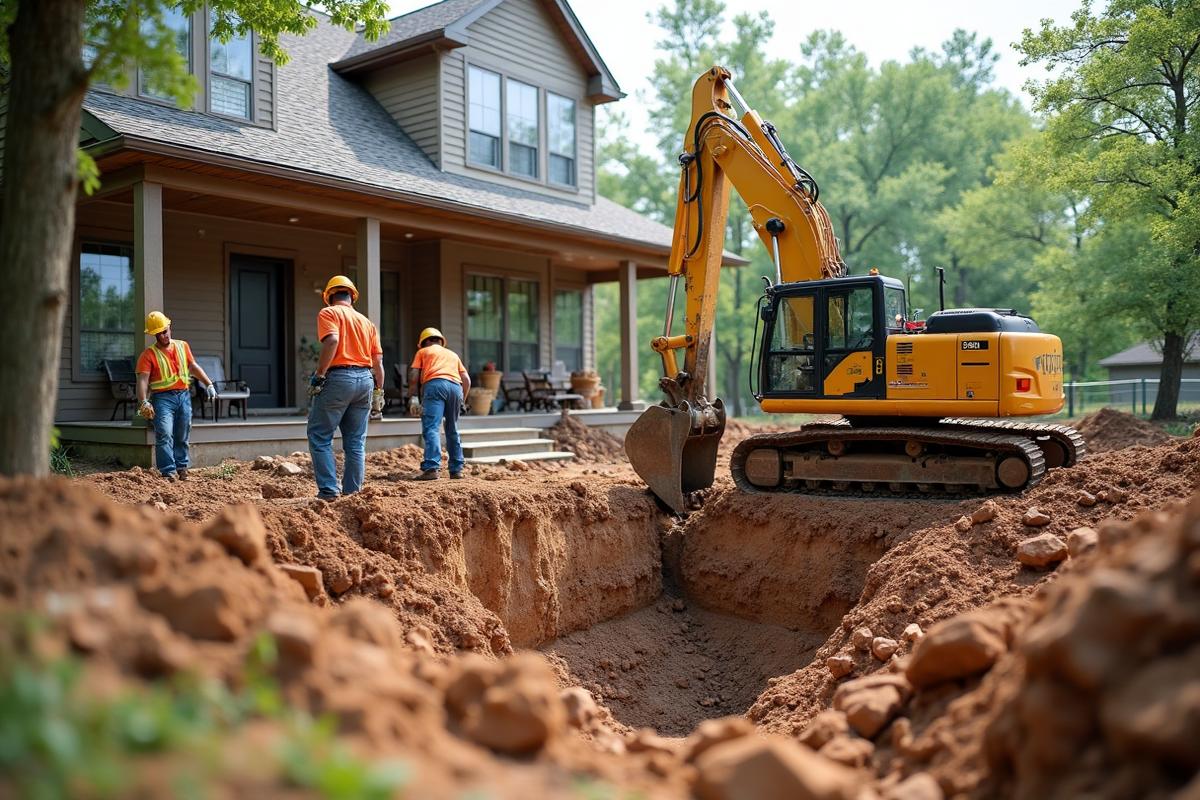
Precise excavation and pier placement using professional equipment
Installation of appropriate pier system (bell bottom, steel, or concrete)
Foundation lifting and stabilization to proper levels
Backfill and site restoration with minimal landscape disruption
Final inspection and lifetime warranty documentation
Why Choose Abilene Foundation Repair?
20+ Years Experience
Decades of experience in Abilene's unique soil conditions
Lifetime Warranties
Comprehensive lifetime warranties on all foundation work
BBB Accredited
A+ rating with Better Business Bureau
Free Inspections
Comprehensive foundation evaluations at no cost
Ready to Fix Your Foundation?
Don't wait for foundation problems to worsen. Get your free inspection today and protect your home's value with professional foundation repair.
Complete Foundation Solutions
Complete foundation solutions for your home's needs
House Leveling
Professional house leveling services to correct uneven foundations and restore structural integrity.
Learn MoreSlab Foundation Repair
Fix cracking, heaving, and settlement in slab-on-grade foundations.
Learn MorePier & Beam Foundation
Complete pier and beam foundation repair including pier replacement and beam work.
Learn MoreYour Foundation Repair Journey
Simple, transparent process from inspection to completion
Free Inspection
Professional assessment of your foundation and soil conditions
Schedule InspectionCustom Estimate
Detailed repair plan and transparent pricing for your specific needs
Get Your EstimateExpert Repair
Professional installation using proven methods and quality materials
View ServicesReady to get started? Schedule your free foundation inspection today.
Why Abilene Foundations Move
Foundations in Abilene fail for a reason that has almost nothing to do with the concrete. Much of Taylor County sits on expansive clay, a soil whose volume changes with its moisture content. Wet it and it swells; dry it and it shrinks and pulls away. West Texas then supplies both extremes in the same year — long rainless stretches through summer, followed by storms that drop several inches in an afternoon.
The damage comes from the difference between one part of a lot and another, not from wet or dry alone. A slab sitting on soil that is saturated at the north-east corner and parched along the south wall is being supported unevenly, and concrete cracks where it is put into tension. That is why the same house can sit still for fifteen years and then move through one drought, and why the repair that lasts addresses the moisture as well as the structure.
It is also why the two cheapest interventions are drainage and watering. Getting roof runoff away from the perimeter and keeping soil moisture reasonably constant through summer prevents far more movement than it repairs — and neither requires a pier.
Pier Types Compared
| Option | Typical cost | Lifespan / duration | Best for | Notes |
|---|---|---|---|---|
| Bell bottom piers | $350–$550 per pier | Design life of the structure | Most single-story Abilene homes on uniform clay | Poured concrete with a flared footing, typically 8–12 ft deep. The flare resists clay uplift. Concrete must cure before load transfer. |
| Steel push piers | $500–$800 per pier | Design life of the structure | Two-story and brick-veneer homes, or deep clay | Driven hydraulically to refusal on dense strata, often 20 ft or deeper. No cure time, so load transfers the same day. |
| Pressed concrete pilings | Between the two above | Design life of the structure | Lighter structures with good access | Precast cylinders pressed in sequence. Cheaper than steel but cannot be driven as deep and is less suited to heavy loads. |
| Slab crack injection only | Lowest of these options | Indefinite if movement has stopped | Cosmetic cracks on a slab that is no longer moving | Epoxy or polyurethane. Appropriate only when elevation readings confirm the slab is stable — otherwise a new crack appears nearby. |
Foundation Repair FAQs
How much does foundation repair cost in Abilene?
Most Abilene foundation repairs land between $4,000 and $15,000, but the honest answer is that the number depends almost entirely on how many piers your house needs and what type. Bell bottom piers run roughly $350 to $550 each installed, and steel piers $500 to $800 each, so a home needing eight piers along one settled corner sits at the low end while a full perimeter of twenty-plus piers sits at the high end. Access matters too: piers under an interior load-bearing wall require tunneling or drilling through the slab, which adds labor that exterior piers do not. Abilene Foundation Repair gives you a written per-pier price after the inspection rather than a lump sum, so you can see exactly what drives the total and decline anything you do not want. Beware of any quote given over the phone without someone walking your property — nobody can count piers from a description of a crack.
How do I know if my foundation actually needs repair?
Not every crack is structural. Hairline cracks in drywall and thin vertical cracks in a slab edge are common in Abilene as clay soil moves through wet and dry seasons, and often need nothing. The signs that do warrant an inspection are horizontal or stair-step cracks wider than about a quarter inch, doors and windows that suddenly stick after years of working fine, floors that visibly slope, gaps opening between walls and ceilings or between brick and window frames, and cracks that keep growing after heavy rain. A useful home test: roll a marble across the floor in several rooms. Consistent movement in one direction suggests differential settlement rather than a bad floor pour. Abilene Foundation Repair will tell you plainly when what you have is cosmetic and needs no work — a free inspection that ends in "leave it alone and watch it" is a legitimate outcome, and we would rather say that than sell piers nobody needs.
What is the difference between bell bottom and steel piers?
Bell bottom piers are poured concrete with a flared footing at the base, typically set eight to twelve feet down depending on where stable soil sits on your lot. That wide bell spreads the load and resists the uplift that Abilene's expansive clay generates when it swells after rain. Steel piers are driven pipe, pushed hydraulically until they hit refusal on bedrock or dense strata, sometimes twenty feet or deeper. Bell bottoms cost less per pier and suit most single-story Abilene homes on relatively uniform clay. Steel piers cost more but reach deeper, cure instantly rather than waiting on concrete, and are the better answer for heavy two-story or brick-veneer structures and for lots where the clay runs unusually deep. Abilene Foundation Repair specs whichever the soil and structure call for and explains the reasoning on the estimate. Anyone who installs only one type will recommend that type regardless of your soil.
How long does foundation repair take?
Most residential foundation repairs in Abilene take one to three days on site. A straightforward exterior pier installation on one corner of a house is often a single day. A full perimeter of piers on a larger home, or a job requiring interior tunneling to reach a load-bearing wall, runs three to five days. You can normally stay in the house the entire time — the work happens outside or beneath the slab, water and power stay connected, and crews clean up daily. What extends a job is weather and access: saturated clay after a heavy Abilene downpour makes excavation slow and messy, and tight side yards or mature landscaping mean hand digging instead of equipment. Abilene Foundation Repair schedules around the forecast where possible and tells you before starting if your lot will add days, rather than discovering it halfway through and revising the timeline.
Will foundation repair damage my landscaping or floors?
Some disturbance is unavoidable, but it is more contained than most people expect. Exterior piers require excavating roughly a two-by-two-foot hole at each location around the perimeter, which means lifting sod, shrubs and sprinkler lines in the work path. We backfill and replace sod, though plants sometimes need a season to recover and irrigation lines occasionally need a splice. Interior piers require drilling roughly six-inch holes through the slab, which are patched with concrete afterward — tile or hardwood directly over a hole will need a small repair, and that area is identified on the estimate before work starts. Abilene Foundation Repair walks the route with you beforehand so nothing is a surprise, and we will move a rose bush rather than dig through it if you tell us it matters. Ask any contractor to mark pier locations with flags before you sign.
Is the warranty transferable if I sell my house?
Yes. Abilene Foundation Repair provides a lifetime transferable warranty on pier installations, which means it follows the property rather than staying with you. If you sell, the new owner inherits the coverage on the sections we repaired at no cost and with no re-inspection fee. This matters more than it sounds during a sale: buyers in Abilene routinely discover foundation work in a disclosure and get nervous, and a documented warranty from a local company turns that from a deal-breaker into a selling point. Keep the warranty certificate and the original estimate with your closing documents, because the buyer's agent will ask for both. Note what the warranty covers — settlement on the piers we installed. It does not cover new movement in an untouched section of the foundation, which is why the inspection report identifies areas we are watching but not repairing.